
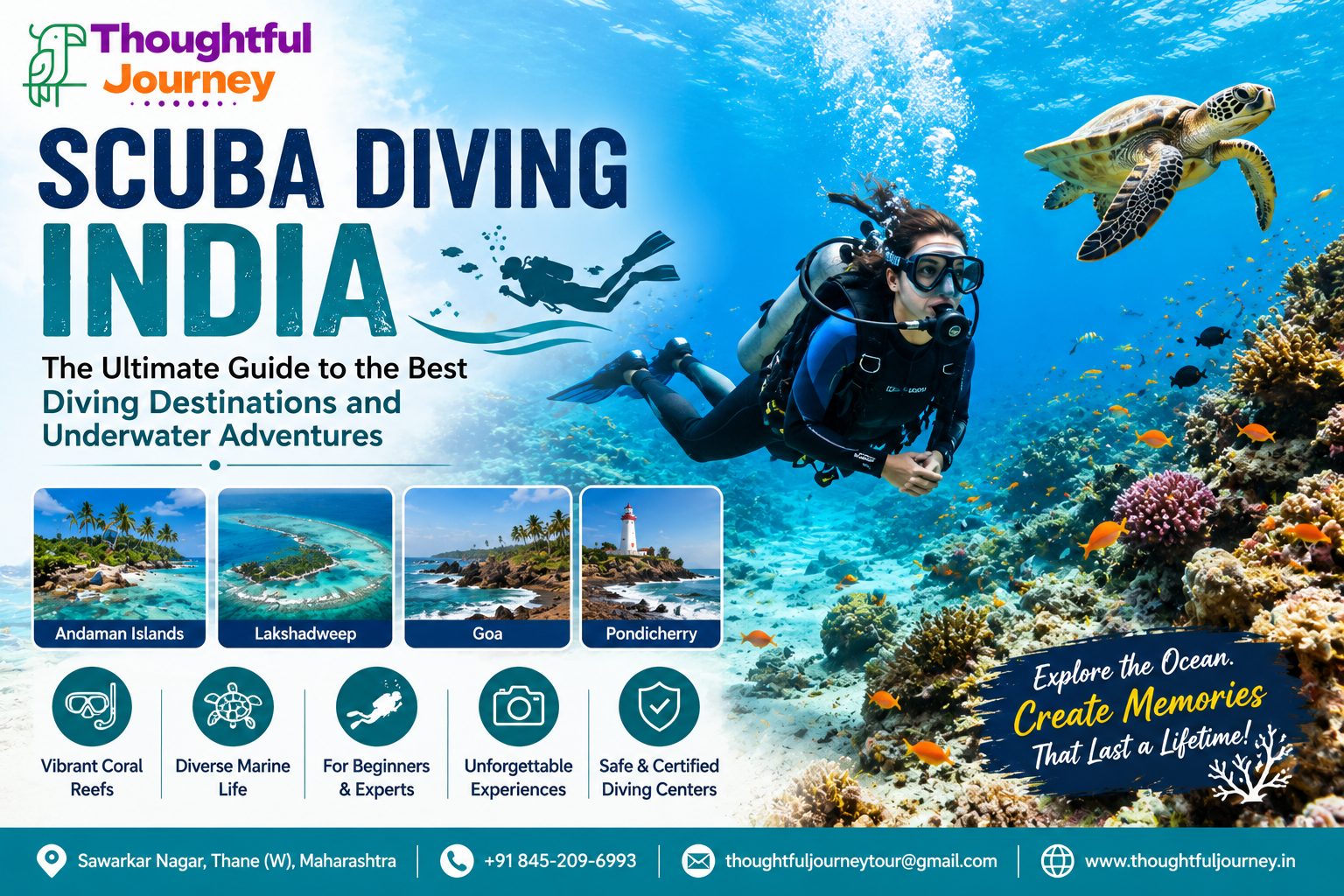
Scuba diving India is one of the most exciting adventure activities for travelers who want to explore a completely different world beneath the ocean. India is blessed with thousands of kilometers of coastline, crystal-clear waters, vibrant coral reefs, and diverse marine life, making it an emerging destination for beginner and professional divers alike. Whether you want to experience colorful coral gardens in the Andaman Islands or explore the rich marine biodiversity of Lakshadweep, Scuba diving India offers unforgettable underwater adventures.
Over the last few years, Scuba diving India has become increasingly popular among adventure enthusiasts, honeymoon couples, solo travelers, and families looking for unique holiday experiences. Modern diving centers, internationally certified instructors, and world-class diving locations have made scuba diving more accessible than ever before.
Planning your diving holiday requires careful preparation. Choosing the right destination, selecting the best season, booking accommodations, comparing Cheap flights to India, and purchasing Travel insurance India are essential steps for a safe and enjoyable trip.
Many travelers combine Scuba diving India with other memorable experiences such as Kashmir tour packages, Himachal Pradesh trekking, a thrilling Leh Ladakh trek, or a relaxing Kerala backwaters tour, creating the perfect multi-destination vacation across India.
Why Scuba Diving India Is Becoming So Popular
The biggest attraction of Scuba diving India is the opportunity to witness an entirely different ecosystem beneath the sea. Colorful coral reefs, tropical fish, sea turtles, rays, reef sharks, octopuses, and countless marine species make every dive unique.
Unlike many international diving destinations, Scuba diving India offers experiences suitable for every skill level. Beginners can participate in discover scuba diving programs without prior certification, while certified divers can explore advanced dive sites featuring deeper reefs, underwater cliffs, caves, and shipwrecks.
Apart from adventure, scuba diving also provides mental relaxation. Floating weightlessly underwater creates a peaceful environment where divers can disconnect from everyday stress and enjoy nature in its purest form.
Professional dive schools across India follow international safety standards, making Scuba diving India both safe and accessible for travelers of different age groups.
Best Places for Scuba Diving India
Andaman and Nicobar Islands
The Andaman Islands are widely considered the best destination for Scuba diving India. Crystal-clear visibility, warm tropical waters, healthy coral reefs, and abundant marine life attract divers from around the world.
Popular diving locations include Havelock Island, Neil Island, North Bay, and Cinque Island. Divers frequently encounter clownfish, lionfish, manta rays, turtles, moray eels, reef sharks, and colorful coral formations.
Whether you are trying scuba diving for the first time or are an experienced diver, the Andaman Islands provide world-class diving experiences.
Lakshadweep Islands
Lakshadweep is another exceptional destination for Scuba diving India. The islands are surrounded by untouched coral atolls, turquoise lagoons, and excellent underwater visibility.
Because tourism remains carefully regulated, Lakshadweep offers relatively uncrowded dive sites compared to many international destinations. The pristine marine ecosystem makes every dive memorable.
Goa
Goa is often associated with beaches and nightlife, but it has also become an important destination for Scuba diving India. Grande Island is particularly popular among beginners due to its accessible dive sites and professional diving schools.
Divers can explore underwater rock formations, coral patches, tropical fish, and occasionally shipwrecks while enjoying the vibrant coastal atmosphere that Goa is famous for.
Pondicherry
Pondicherry has emerged as one of the fastest-growing destinations for Scuba diving India. It is especially well known for its artificial reef projects that attract diverse marine species.
Certified divers appreciate the variety of underwater landscapes available here, while beginners benefit from experienced instructors and structured training programs.
Best Time for Scuba Diving India
Selecting the right season plays a major role in planning a successful Scuba diving India holiday.
For the Andaman Islands, October to May offers calm seas, excellent underwater visibility, and comfortable weather conditions. This period is considered ideal for recreational diving and underwater photography.
Lakshadweep generally provides the best diving conditions between October and March, when the Arabian Sea remains relatively calm.
Goa offers enjoyable diving experiences from October until May, avoiding the heavy monsoon season that affects underwater visibility.
Knowing the Best hill stations in India and the Best time to visit India also allows travelers to combine mountain holidays with coastal adventures, creating diverse travel experiences in one itinerary.
Safety Tips for Scuba Diving India
Safety is the foundation of every successful Scuba diving India experience. Although scuba diving is generally considered safe when proper procedures are followed, every diver should receive training from certified instructors before entering the water.
Always attend the safety briefing, understand underwater hand signals, and check your equipment carefully before every dive. Never dive alone unless participating in a professional technical diving program.
Maintaining calm breathing underwater helps conserve air while improving overall comfort during the dive. Divers should also avoid touching coral reefs or disturbing marine life to help protect fragile underwater ecosystems.
After completing your dive, allow sufficient surface interval before flying, as recommended by your instructor. This precaution reduces the risk of decompression-related complications.
Purchasing comprehensive Travel insurance India that includes scuba diving coverage is another important safety measure. Adventure sports may require specialized insurance coverage depending on the policy.
Preparing for Your Scuba Diving India Adventure
Preparing well before your trip ensures a smoother Scuba diving India experience.
Choose a certified dive center with experienced instructors and good safety records. Read customer reviews, compare available courses, and verify equipment quality before making your booking.
Pack lightweight clothing, swimwear, sunscreen, waterproof bags, sunglasses, and personal medications. Although dive centers provide most diving equipment, carrying your own mask or underwater camera can improve your overall experience.
Travelers arriving from different parts of the country should compare Cheap flights to India well in advance, especially when visiting island destinations like Andaman or Lakshadweep during peak tourist seasons.
If your holiday includes multiple destinations, planning transportation between cities before departure can help avoid unnecessary travel stress.
Combine Scuba Diving India with Other Incredible Destinations
One of the greatest advantages of planning a holiday in India is the opportunity to combine different types of travel experiences.
Adventure enthusiasts often begin with Himachal Pradesh trekking or a challenging Leh Ladakh trek, followed by several relaxing days enjoying Scuba diving India in the Andaman Islands or Goa.
Nature lovers frequently combine diving with a peaceful Kerala backwaters tour, while travelers seeking cultural diversity often extend their itinerary with a scenic Northeast India tour.
For wildlife enthusiasts, adding a Wildlife safari India experience after scuba diving creates a vacation filled with unforgettable memories both above and below the water.
Thoughtfully combining destinations allows travelers to experience India’s incredible diversity during one well-planned journey.
Scuba Diving India Costs and Certification
The cost of Scuba diving India depends on the destination, dive center, and type of diving experience you choose. Beginners can participate in introductory dive programs that include basic training, equipment, and one supervised dive. Certified divers can choose advanced dive packages, night dives, or multi-day diving experiences.
If you plan to dive regularly, obtaining an internationally recognized certification from organizations such as PADI or SSI is a worthwhile investment. Certification allows you to explore more dive sites across India and around the world while improving your underwater skills and confidence.
Although certification requires additional time and training, it opens the door to deeper dives, underwater photography, wreck diving, and advanced adventure courses.
Before booking your diving course, compare reviews, instructor qualifications, safety standards, and equipment quality. Choosing a reputable dive center ensures a safer and more enjoyable Scuba diving India experience.
Protecting Marine Life While Scuba Diving India
One of the greatest responsibilities of every diver is protecting the underwater environment. Coral reefs are among the world’s most fragile ecosystems, and small actions can have a lasting impact.
During Scuba diving India, avoid touching corals, collecting shells, feeding fish, or disturbing marine animals. Good buoyancy control helps prevent accidental contact with reefs while allowing you to observe marine life naturally.
Many diving organizations in India actively support ocean conservation through reef clean-up programs, coral restoration projects, and environmental awareness campaigns. Participating in these initiatives allows travelers to contribute positively while enjoying their diving holiday.
Responsible diving ensures that future generations can continue to experience the incredible underwater beauty that makes Scuba diving India so special.
Planning the Perfect Adventure Holiday
Many travelers choose to combine Scuba diving India with other exciting destinations across the country.
Adventure lovers often begin their journey with Himachal Pradesh trekking, followed by a challenging Leh Ladakh trek, before relaxing on the beaches of the Andaman Islands or Goa.
Nature enthusiasts frequently add a peaceful Kerala backwaters tour to their itinerary, while travelers looking for cultural experiences explore a scenic Northeast India tour after completing their diving adventure.
Wildlife enthusiasts can continue their journey with a memorable Wildlife safari India, visiting famous national parks like Ranthambore, Jim Corbett, Bandhavgarh, or Kanha to witness Bengal tigers, elephants, leopards, and other incredible wildlife.
Combining mountains, beaches, forests, and cultural destinations creates one of the most rewarding travel experiences available in India.
Why Travel Insurance India Is Essential
Adventure travel always involves a certain level of risk, making Travel insurance India an important part of every diving holiday.
A suitable insurance policy can provide financial protection against medical emergencies, trip interruptions, delayed baggage, flight cancellations, and emergency assistance. Since scuba diving is considered an adventure activity, travelers should ensure that their Travel insurance India policy specifically covers recreational diving.
If your vacation also includes Himachal Pradesh trekking, a Leh Ladakh trek, or other adventure activities, choosing comprehensive insurance becomes even more important.
Planning ahead gives you peace of mind, allowing you to enjoy every dive with confidence.
Why Book with Thoughtful Journey
Planning a diving holiday requires careful coordination of flights, hotels, transfers, activity bookings, and local transportation. Choosing an experienced travel partner makes the process much easier.
At Thoughtful Journey, we help travelers create customized holiday experiences based on their interests, budget, and travel style. Whether you’re planning Scuba diving India, booking Kashmir tour packages, organizing a Kerala backwaters tour, exploring the best hill stations in India, or preparing for a Wildlife safari India, our travel experts are here to assist you.
From selecting the right destination to planning complete itineraries, we ensure your holiday is smooth, enjoyable, and memorable.
Conclusion
Scuba diving India offers an extraordinary opportunity to discover the fascinating underwater world while exploring some of the country’s most beautiful coastal destinations. From the crystal-clear waters of the Andaman Islands and Lakshadweep to the vibrant dive sites of Goa and Pondicherry, every destination offers unique marine life and unforgettable diving experiences.
Proper planning, choosing the right season, selecting certified dive operators, carrying appropriate travel documents, and purchasing Travel insurance India all contribute to a safe and enjoyable diving holiday.
You can also make your vacation even more exciting by combining Scuba diving India with Kashmir tour packages, Himachal Pradesh trekking, a Leh Ladakh trek, a Kerala backwaters tour, a Northeast India tour, or an unforgettable Wildlife safari India.
Whether you’re taking your first dive or expanding your underwater adventures, India offers endless opportunities to create memories that will last a lifetime.
Contact Thoughtful Journey
Ready to experience the thrill of Scuba diving India?
Let Thoughtful Journey help you plan the perfect adventure with customized travel packages, expert guidance, and seamless travel arrange
ments.
📍 Store Location:
Sawarkar Nagar, Thane (W), Maharashtra
📞 Phone Number:
+91 845-209-6993
Contact us today and begin your next unforgettable underwater adventure.
FAQs
1. What is the best place for Scuba diving India?
The Andaman and Nicobar Islands are considered the top destination for Scuba diving India, followed by Lakshadweep, Goa, and Pondicherry due to their clear waters and rich marine life.
2. Is Scuba diving India suitable for beginners?
Yes. Many certified dive centers offer beginner-friendly discovery dives with professional instructors, making Scuba diving India safe and enjoyable for first-time divers.
3. What is the best time for Scuba diving India?
The ideal time for Scuba diving India is from October to May, depending on the destination. This period generally offers calm seas and excellent underwater visibility.
4. Do I need Travel insurance India for scuba diving?
Yes. It is recommended to purchase Travel insurance India that includes adventure sports coverage to protect against unexpected medical emergencies and travel disruptions.
5. Can I combine Scuba diving India with other destinations?
Absolutely. Many travelers combine Scuba diving India with Kashmir tour packages, Himachal Pradesh trekking, a Kerala backwaters tour, or a Northeast India tour for a diverse travel experience.
6. Why should I book my trip with Thoughtful Journey?
Thoughtful Journey offers personalized travel planning, customized itineraries, accommodation assistance, and expert guidance to make your Scuba diving India adventure smooth, safe, and memorable.